

How to Be a Power Breaker
As we close out the series, some lessons learned from our Power Breakers series that you can take out into the world.

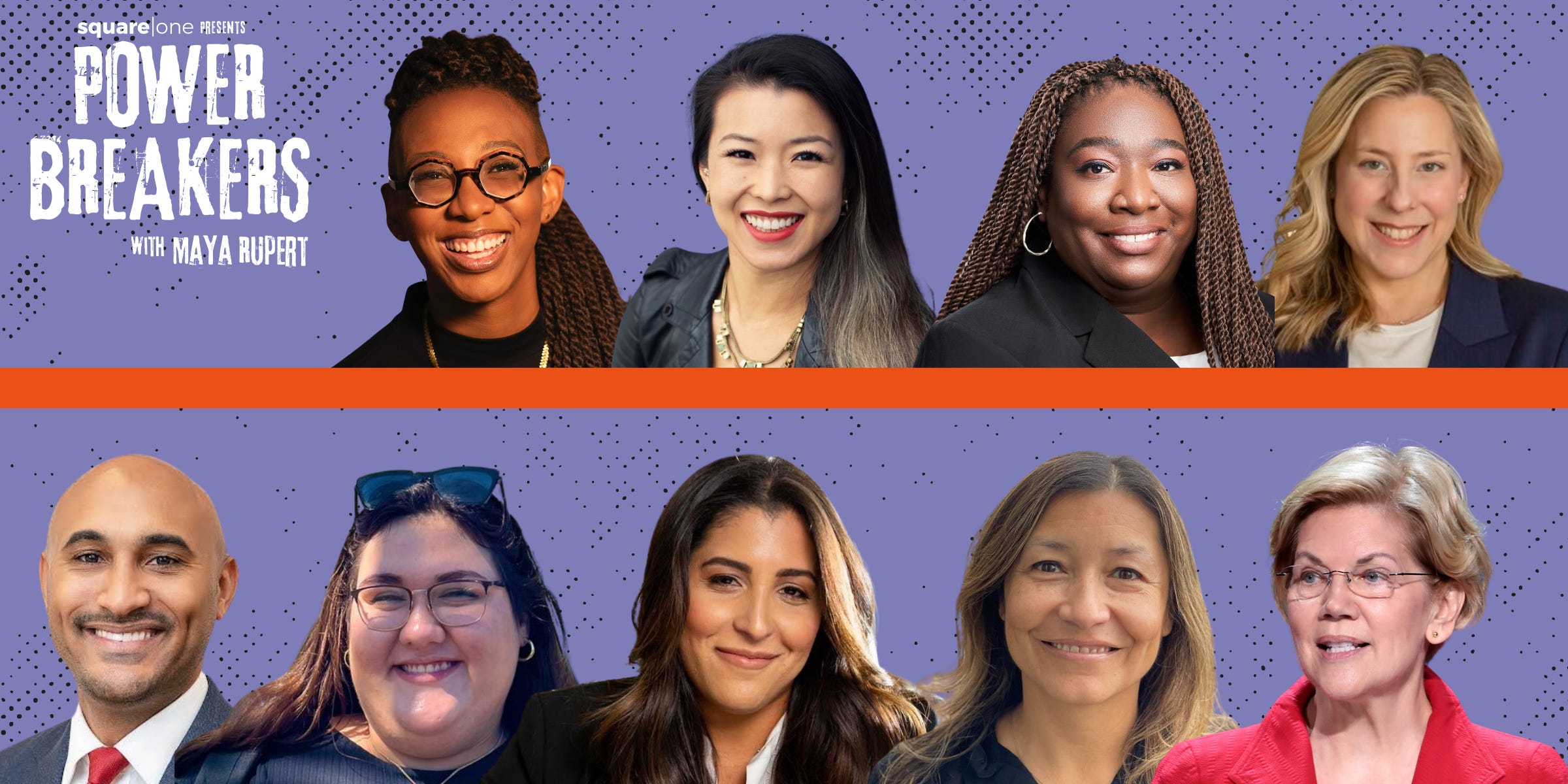
When we launched Power Breakers, we were in the midst of a political moment that felt precarious. But it’s often in those moments when the stakes are highest that there is most potential to effect real change. To engage in meaningful power-shifting and make room for lasting power-building. So we looked around and asked ourselves what was stopping us from getting the diverse, engaged, abundant leadership we needed in this moment. We asked ourselves if we could reimagine this moment, what would our political transformation look like. And then we looked for the people capable of delivering that transformation. That was the idea behind Power Breakers.
Power can’t simply be brokered differently. The system that gatekeeps power needs to be reimagined. We started this series as a way to highlight leaders and rising stars, and to offer hope.
In a lot of ways, the challenges that brought us to create Power Breakers have gotten harder. But in very real ways, we have been reminded why we did this. Because it's in these moments that our paths forward become clear.
What we needed then is what we always need in these moments. The people who see moments like this and are not cowed but inspired. The people who see defeat and are even more confident that victory will come. The people who see the biggest challenges and choose that moment to step up. The people who are confronted with a problem and raise their hand to fix it are the only ones who will ever be able to because they’re the ones who can imagine something better.
In this moment, we need people who are ready to imagine. And the people reading this are likely just those people. So we need you. Fortunately, Power Breakers featured an array of leaders who laid out the playbook for how to capture that imagination and work collectively to make it a reality.
So let’s take lessons learned from our Power Breakers series that you can take out into the world.
Step 1: What can you do that will make a difference?
The upside of a political moment like the one we face today, is that there is no shortage of needs. We need leaders willing to fight back against authoritarianism, protect our institutions, defend our democracy, and be a champion for people and families across the country. And that means people with diverse and varied skills, goals, interests, and expertise are all needed at every level of government, in every state, and in every community. So ask yourself what’s calling to you? Where can you do the most good?
Take a page from organizations like Sister District. As immediate past Executive Director Lala Wu explained, she and her partners founded Sister District in the wake of the devastating 2016 presidential election after asking themselves the simple question: “[As people who] live in California, what can we do that will make a difference?” For them, the answer was to laser focus on state and local races where critical issues were at stake during every race, but they received much less attention, engagement, and resources. They are transforming that model to win progressive victories and remind people of the incredible power they have to impact change in their communities.
Once you figure out your answer to that question of what you can do to make a difference, ask yourself why? As Senator Elizabeth Warren reminded us, nothing can get done unless you have a plan for it. Senator Warren reminded us of the real change that can happen when we win — from restoring reproductive rights, voting rights, and the right to unionize — to, as she put it, “putting our chips on democracy” with big changes like D.C. statehood and giving more actual power to voters. She also reminded us that we all need to get involved. As she put it,
We gotta bring in more people off our bench. We gotta bring in lots of people who say “I really care so I'm going to run for office.” Or “I really care, so I’m going to help somebody who's running for office. I'm going to offer to be my neighbor's campaign manager.” Or “I'm going to keep my day job as a graphic designer and then in the evening set up websites and make them all work for candidates right here in my state. Candidates who are out there fighting for what I believe in.”
Once you know why you’re doing it, it’s time to get to work. Decide what fight you want to take on — and where you want to do it. As now Congressman Shomari Figures taught us, a lot of times that fight is in your very own community. And no one can speak on behalf of that community like the people who come from there. As Figures reminded us, there’s value to representing the place that raised you. “It shaped my view of the world and how I approach the issues,” he said of his hometown and the district he now represents. It gave him his career, he explained. “I don't think I would have had the chance to work for President Obama if I'm not from Mobile, Alabama.” And so it was fitting that the next stage of that career be on behalf of that community.
Strategize like Lala and Sister District. Plan like Senator Warren. Work like Congressman Figures.
Step 2: Build an operation that reflects who you are
The next step is building the organization you need around you. Launch a strong campaign that reflects your values. Build with committed supporters who will be the engine of your operation. Align yourself with fierce movements that will help you identify the issues that matter most to your community. These decisions are the easiest way to communicate to voters who you are. The people you hire, the way you lead your campaign, the people who serve as early ambassadors — this is how you can assure voters that your message isn’t mere rhetoric. Everything and everyone that you bring in to surround you will help to define you and show how you will live your values. So make sure you choose people like Julie Chavez Rodriguez. It’s impossible to anticipate what your campaign will have to respond to, but when you choose leaders who can get things done, you know you’ll be prepared for anything.
When President Biden withdrew from the race and Vice President Harris became the nominee, Julie showed us the definition of grace under pressure. As the campaign manager for both enterprises, she had a herculean effort before her. They had to wind down one campaign, spin up another, choose a running mate, execute a convention, and introduce a new nominee to voters on an incredibly abbreviated timeline. But they didn’t stop there. The Harris campaign made the forward-thinking decision to make historic investments in down ballot races across the country because, as Julie explained, “we want to make sure that we're doing our part to support Democrats at every level. We know that it takes all of us.”
Campaigns are powered by people. We hear sentiments like that a lot. But it’s true. Campaigns belong to their supporters, and the organic relationship that forms when supporters join and begin to organize for a campaign, a candidate, an issue, or a movement is one of my favorite things we create as humans. This means the strength of your campaign will depend on organizing and the organizers who gravitate toward you. People like Olivia Julianna, who at 21 years old is already a seasoned organizer and strategist, are who you need in your corner.
Fortunately, Olivia told us how to win over people like her. First, you need to fight everywhere. Don’t write off the states (or districts, or areas in your community) where you think you won’t win — invest now and start building a ground game because as communities change, those “unwinnnable” places become inevitable places, as long as we invest in the infrastructure needed to win. As Olivia puts it of her home state of Texas, “[w]e are going to flip the state of Texas. It’s not a question of if, it’s a question of when.” Second, don’t call non-voters apathetic. Low turnout from young voters doesn’t mean they’re not engaged. Olivia advises showing young people who want to see that their vote matters that change is happening. Get them involved at the local level where big change is often more visible. And finally, leaders need to help connect the dots for people and help them “understand that what the government does every single day impacts them.” If we can do that, we will unlock and empower scores of young, engaged organizers across the country ready to power the next generation of campaigns.
As a candidate, you will be defined by the issues you prioritize and the communities you fight for. So make sure they reflect who you are and how you want to lead. And the best way to do that is to align yourself with movement leaders with an unwavering moral code and an ability to translate the urgency of a moment to voters. Surround yourself with leaders who can inspire, organize, and fire people up. Get yourself some folks like Human Rights Campaign President Kelley Robinson.
The LGBTQ+ community has fought and won some incredibly difficult battles — from marriage equality to discrimination protections to banning conversion therapy in states across the country to making gender affirming healthcare more accessible. And in this political climate, there is a devastating potential for these victories to be rolled back, as we have already seen happening around protections for transgender people. These are the moments that movement leaders suit up for. And Kelley reminded us of that fact. There have always been moments where the promise of America felt out of reach for many of us: “Change happens because we showed up.” She showed us what this moment is made of. And what we’re made of:
The whole story of America kind of sounds like a fantasy tale when you're growing up as a Black, queer kid. And to think that the people that actually get to make America live up to its promise to all of us could be people that look and love like me? There's something about that that is just truly inspired, and is only possible in these sorts of places and these kinds of moments.
Build like Julie. Organize like Olivia. Inspire like Kelley.
Step 3: Support other leaders and bring them with you
To transform the system, we need you. But that’s not all. We need all of you. We need all of us. We need everyone who is reading this and thinking about how they can make a difference to become a network of Power Breakers. With that kind of energy, we can build a platform from which people can launch these efforts and feel the support, encouragement, and community of others who are doing the same work. We can build power together. We can share best practices and lessons learned. We can celebrate our wins together and lift each other up when we lose so we are ready to try again.
That’s the brilliance of political action committee models like LPAC and Vote Mama PAC. They are organizations that help identify, resource, and support underrepresented candidates to run for office and help dismantle some of the barriers that keep us from getting the leaders we deserve.
When Liuba Gretchen Shirley ran for office she realized one of her biggest campaign expenses wasn’t recognized as a valid campaign expense: childcare. As a candidate, she was the mother of two young kids that she was having to take everywhere, and when she was initially told childcare was not a legitimate campaign expense, she fought that decision. Not just for herself, but for everyone. She petitioned the Federal Elections Commission (FEC) and she won. She changed the way parents can run for office forever and for better. Childcare was just one barrier that disproportionately impacted mothers and their ability to run for office, so she founded Vote Mama PAC to take aim at more of them: childcare access for state and local candidates, bans on remote and proxy voting, unpaid or low paid elected jobs, facilities without accessible restrooms for nursing mothers. Vote Mama PAC supports mothers running for office and delivers real change on these barriers that make these roles harder for mothers to hold. And electing moms helps everyone. Because as Liuba puts it, “you want something done? You give it to a busy mother.”
Janelle Perez came to run LPAC in 2024, after her own LPAC-backed bid for State Senate in Florida in 2022 ended. As a former candidate, she knew firsthand how important the work of LPAC was for queer women running up and down the ballot across the country. But she also knew how critical the cohort was that they built among their endorsed candidates. She experienced the power of connecting candidates with shared identities and a shared sense of purpose — because it's way too easy to feel alone. Online harassment and discrimination can plague queer women, especially queer women of color and transgender women, running for office. LPAC surrounds its candidates with a coalition of other people who have gone through their own campaigns and — win or lose — came out the other side fired up to continue their work. That community builds power. And Janelle knows how to harness power. As she explained, “when we work together as a community, we can accomplish so much more. And that’s what we’re going to be looking for in the future: more chances to do just that.”
Deliver like Vote Mama PAC. Support like LPAC. Believe like Liuba and Janelle.
Closing
When we started this series, we made three promises: We’d make you think. We’d make you question. And we’d make you hope.
Why? Because that’s how things change.
Thoughtful people wondering why things are the way they are and retaining the ability to imagine something better is how we change the world. Power shifting slowly and then all at once. People working together to build something better than we have seen and closer to what we can imagine. Thinking, questioning, and hoping are the correct answers to the questions being posed to us by this political moment. The next step is to act. So let’s get to work.
Together.
