

The Lala Wu Interview: State and Local Elections for the Win
The Sister District Executive Director on how looking down ballot can have big-time impact on the issues we care about most — and why we all need to pay attention.

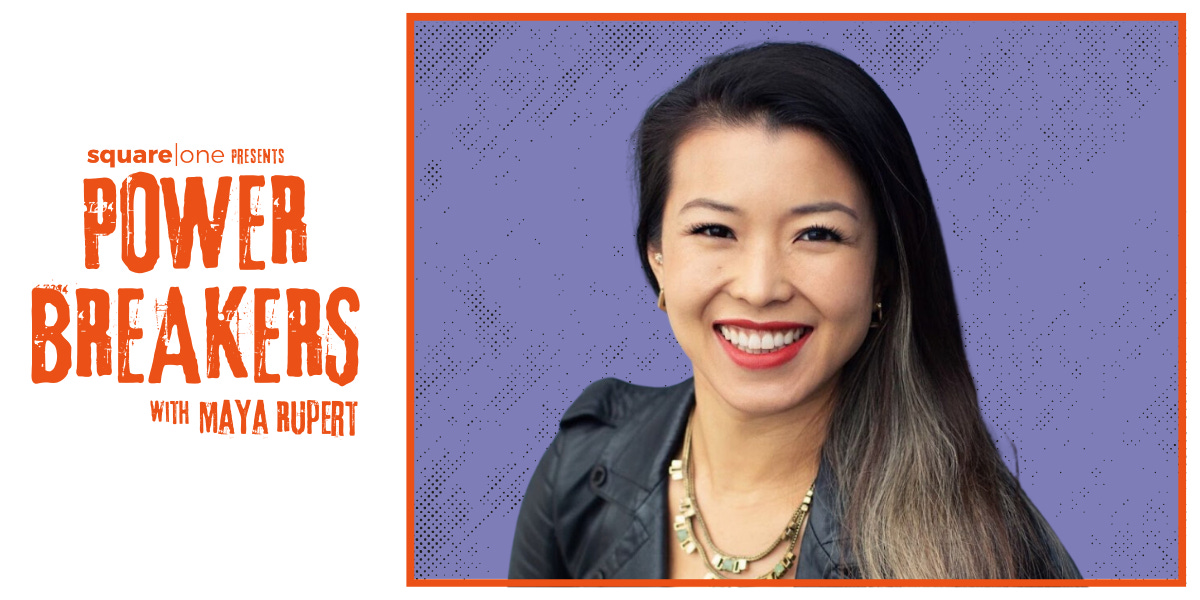
Welcome back to Power Breakers from Square One, a new interview series where every other week, we’ll bring you a conversation on the people and ideas that matter in this election cycle and beyond. We’ll make you think. We’ll make you question. We’ll make you hope.
Last month was the Democratic National Convention. Next week is the first presidential debate since Vice President Kamala Harris became the Democratic nominee. So while it seems like all eyes are on the presidential election and the issues at stake in that race, this week we’ll be focusing on — you guessed it — state legislature elections!
If that seems like a detour to you, stay tuned. Because if you care about issues like abortion access, climate change, and protecting democracy, the most consequential election coming up very well may be a state race that you haven’t been following very closely. But you should be.
Democrats are focused heavily on federal elections (and it’s critical work). But it’s often at the expense of state and local elections and, as a result, we are outmatched when it comes to holding power in state legislatures and in trifecta states — where one party controls the governorship and both chambers of the legislature. This has a serious impact on the issues we care most about. With Republicans holding the US House, not a lot of big legislation is moving at the federal level. So the common belief among Democrats that the federal government is the only place to make a big impact on these issues simply isn’t true — there’s more to the story.
In reality, state law shapes these significant policy issues in addition to federal law. State legislatures play an important role in determining the issues that are defining our political conversation, and it’s time our investment in those races matched their potential for game-changing impact.
Right now, several states are considering consequential bills that can significantly expand or restrict abortion access for people who need it. States are considering critically important climate plans and determining whether to invest money in green infrastructure. They are on the frontlines of battles around education, equal access to healthcare, protecting our democracy, and keeping people safe from gun violence. And these races often turn on a razor-slim margin where every vote truly counts. That’s the simple philosophy that underlies the incredible work of Sister District and the theory they are using to transform how Democrats engage in politics.
If you want to feel the power of our democracy in a moment where it seems more fragile than ever, pay attention to the state and local level in addition to the federal level, and watch how impactful your voice can be on the issues you care about the most.
I got to sit down with Lala Wu, the powerhouse Executive Director of Sister District, to talk about why they are focusing on state legislatures, what victory in the states can mean for people on an everyday basis, and what the future can look like if we focus on this kind of critical power building in addition to important federal work.
Love Power Breakers? Consider supporting this work with a contribution.
Maya Rupert: So to start, so much of our political coverage has focused on the Presidential election, and understandably so, but obviously Sister District has made the decision to focus on races in the state legislature. Can you talk a little about why you chose that focus and, more broadly, what is your theory of change?
Lala Wu: Yeah, absolutely. We here at Sister District have been obsessed with state legislatures since we were founded in the wake of the 2016 election, and we have been obsessed with them because state legislatures are the biggest bang for your buck. They have an outsized impact on every issue that we care about, from abortion, to guns, to climate, to education, to democracy itself.
Second, in most states, it's the state legislatures that control redistricting, which determine gerrymandering — and whether or not we're going to live in a truly representative democracy.
And third, they are the national pipeline. These leaders, locally today, will become tomorrow's members of Congress, Senators, even Presidents. And all of this can be done at a fraction of the cost of a typical Congressional or Senate or Presidential race. These races are often smaller. They're under-resourced. And when you give your $20 or your 20 hours or your 20 phone calls, you know that you've really, really made a difference. And we know that because of the close margins that we've seen over and over again.
Just as an example, in 2022, we supported a candidate named Melissa Cerrato, who is now a representative in the Pennsylvania State House, and her single victory helped to flip the Pennsylvania State House Democratic for the first time since 2010. And it was done with her winning by just 63 votes. And that's very common. Sometimes it’s 63 votes. Sometimes it’s 354 votes. Or it’s 140 votes. In 2017 we supported a candidate who was the only candidate we supported that year who was not victorious, but she actually lost her race when it was a dead, even tie, and they didn’t draw her name out of an ornate ceramic bowl and if they had, she would have ended the Republican majority in the Virginia House of Delegates that year. But there is a happy ending to that one because we came back two years later, in 2019, we supported her again, and then we got a Democratic trifecta that ushered in a wave of incredible legislation that benefited millions of people.
MR: That is incredible. You said something that I want to follow up on, because it's something I didn't know, and I think it's really important. You said Sister District was founded in the wake of 2016? And that was definitely another moment where it felt like all eyes were on the national picture. Can you talk a little bit about that? Because that takes an incredible amount of foresight, to decide in a moment like that to actually make deep investments in the states.
LW: Yeah, absolutely. I'm sure you can remember where you were in 2016 when you were watching the election results come in. I happened to be with friends sitting on the chilly back patio of a bar here in San Francisco, and we just could not believe what we were watching. First, we realized that it was not going to be our first female President, and then instead that it would be the election of a celebrity lunatic. We were crying, we were hugging each other. We were terrified, we were confused, we were angry, and we somehow made it home. When we woke up,the next day we asked ourselves, Well, what is it that we can do?
I thought I could call Nancy Pelosi, which would be the federal focus, but she already agrees with me. And this was a problem that kept coming up over and over: We live in California. So what can we do that will make a difference?
I was working as a clean energy attorney at a big law firm at the time, and I happened to meet four other lawyers who actually were mostly strangers. We met on Facebook, and we connected around this idea of channeling resources where they are, to where they may be most needed and strategic. And we did the landscape analysis, and we saw that there was nobody working on state legislatures beyond the Democratic Legislative Campaign Committee. We saw how important they were for redistricting, which was right around the corner. And we could see so clearly how that had contributed to the structural advantages that Republicans had had since REDMAP in 2010. We could also see that the state legislatures, even before the fall of Roe V. Wade, were going to be so consequential on issues like reproductive rights. And so for all of these different reasons, we saw that we could really make an impact.
MR: That’s incredible. There's always been this narrative that we, as Democrats, tend to hyper overfocus on the national level. Do you have a sense as to why that is? Would you attribute that to a lack of understanding of exactly how important the battles in the states are for people’s everyday lives?
LW: What a great question! So we believe very strongly — it's part of our theory of change — that the reason that state legislatures, and other state and local races, have been so underinvested in on our side is exactly what you alluded to. It's exactly that for far too long, the left has been over invested in federal strategies at the expense of also building power at the state and local levels. And this has had really severe consequences. It is understandable in a lot of ways.
The civil rights era looms really large in our imaginations. And when we think about the civil rights era, and we think about segregation, the Supreme Court and Brown v. Board of Education — this was a federal solution. When we think about the Jim Crow laws, we think about how those were state laws in the south. And how did they end? Well, they ended with all of this federal legislation that came out of Congress. The Voting Rights Act, all of this epic civil rights legislation. In this story, the federal government plays very, very heavily into it, and states look like the enemy.
Well, the problem with that understanding is that it's a bit ahistorical. While those things happened, the Supreme Court has not always been on the side of civil rights. There was a brief moment in time where that was the case, but pretty much before and after, that has not been the case, and it is definitely not the case now. We have an arch conservative Supreme Court right now. The federal government is not coming to save us. And so what we need to be doing is what the right has been doing this whole time, which is building power at every single level of government. And that's why we focus on the states.
MR: I love how you describe that so much.
So while obviously different strategies, it feels like a federal and state electoral strategy should play into each other very easily. There’s a sense that we all tend to have, that if you have a strong top of the ticket, that is necessarily going to impact everybody else down the ballot. So when we got a nominee at the top of the ticket in Kamala Harris that people feel really fired up about, it seems like that means up and down the ballot, people can expect to see higher turnout. But Sister District has found that not to necessarily be the case. Can you talk about that?
LW: Yes, so what you are alluding to is this idea of presidential coattails, or top of the ticket coattails. This is the conventional wisdom — that folks at the top of the ticket bring up folks beneath them. And this is actually generally true. It is true that if you've got a strong, dynamic candidate at the top of the ticket, the rest of the ticket benefits. So that's why we're so excited. Kamala Harris being at the top of the ticket, all of the enthusiasm, this is very very good news for down ballot candidates.
However, we have researched a phenomenon called down ballot roll off. And this is where a voter ticks the box at the top, but not at the bottom of the ticket. Basically, they start at the top and they roll off or stop voting before they get all the way down. This is a problem, a phenomenon that is much more common among Democrats than Republicans. And it's a huge problem because of the very, very narrow margins that we talked about earlier. If you've got all of these people voting for the top of the ticket, and they don't finish voting all the way down, that can mean the difference between a win and a loss in these seats.
We have done original research here at Sister District. Not only does it impact Democrats more than Republicans, it impacts women, young people, and people of color all more. So one of the things that we did was a large 5,000 voter survey of battleground state voters, and we asked what was going on: Why is it that you did not vote down the ticket? We did focus groups as well, and what we found is that nobody really knows much about state legislative races. And that's pretty common across the board, but it doesn't stop those on the right. They just start at the top, and they feel it's their civic duty to vote all the way down. But those on the left, they think to themselves, “Well, I don't really want to vote for somebody who's not in accordance with my values” or “I don't want to vote for the ‘wrong person’”. And they think it’s their civic duty to only vote if they know everything about someone.
So we are working with some amazing messaging experts, creative designers. We want the voters to get the message that you need to vote all the way down the ticket because the issues they care about — whether it’s reproductive rights, or climate, or education, or gun safety, or whatever it is — those issues are on the line in these races. And we have put together a down ballot toolkit which is available to everyone in our movement in our ecosystem.
MR: You made another point about this work that is really important, and that’s that people running at this level are going to enter the pipeline and become leaders at higher levels. Can you talk a little bit about what that pipeline looks like, and how we just continue to make sure to feed it?
LW: Yes, absolutely. The examples of the pipeline are all over, and of course they’re not just our candidates, but just to name a few: At the DNC, on the main stage, we saw Mallory McMorrow, for example, who is a state Senator from Michigan, who we supported in her very first run for office. She likes to talk about how incredible it was that she was running a campaign, she hadn't done it before, and then, all of a sudden, we said that we wanted to send a dozen or so volunteers to go knock doors for her in Michigan, raising her tens of thousands of dollars. And then there she is at the DNC making a very compelling case. Another example is Sarah Rodriguez in Wisconsin. We supported her in getting elected to the state legislature there, and now she is Lieutenant Governor. She also spoke on the DNC main stage.
And we've got a number of candidates who are running for Congress, or for other statewide offices like Attorneys General. We see these stories of people honing their craft at the state level, both in terms of being a good candidate, but also in terms of governance: learning how to make compromises while staying true to their values, learning how to actually get policy passed.
We also have a program called Future Winners, which is where we identify exceptional candidates who unfortunately lost an initial race, but who should really run again. We started this program, and we operate it in partnership with the DLCC and Emily's List because we saw that there was a real gap. There were these lost opportunities, and we saw it happening especially with women, young people, and people of color. They were really, really amazing candidates, but they often have to run more than once in order to win, and that’s really grueling to do. So the program is to pick people back up, give them a community, make sure that they feel supported, give help to level up their skills so they can run again.
MR: I’m so grateful for this conversation, and for the work you all are doing. I’m really excited that this is all happening and just want to make sure people know what you’re doing and how they can help. If you could leave people sort of starting to understand this ecosystem with a message, what would it be?
LW: In this modern world that we live in, attention is one of our greatest resources. It's so telling what we pay attention to. And of course we have to pay attention to what's going on at the federal level, it's existential. It absolutely is, but so is what's going on at the state level. And so I would just implore people to seek out not just news about the headlines of what's going on in the race. But I would really encourage people for every article about something federal that you read, look up something at the state and local level. And if you can't find it in a national outlet, then look at your local outlets. This is critically important — we need to give those stories the clicks — so that there will be more of those stories. Because the more that we understand what's going on at the state and local level, that will unlock more dollars, more votes, more attention, more volunteers, and more of all of the kinds of things that we need to do to support these absolutely incredible leaders who are coming up at the state and local levels.
This interview has been condensed and edited for clarity.
Power Breakers is fueled by Square One, the national non-profit dedicated to electing women, people of color and LGBTQ+ candidates. Help us elect breakthrough leaders and shine a light on inspiring stories with a contribution.
